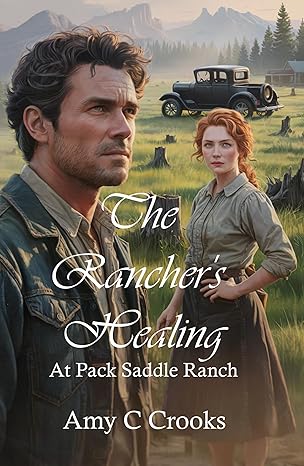
Step into the world of Pack Saddle Ranch, where clearing land could cost you everything The first thing you need to understand about northern Idaho in 1927 is this: the land didn't want you there. Not in a mystical sense—though the old-timers might argue otherwise after too much whiskey. No, the land resisted in a far more practical way. After the great lumber companies swept through like locusts, harvesting centuries-old pines and leaving behind a moonscape of stumps, the real work began. Welcome to stump ranch country. What Was a Stump Ranch?Picture this: You've just bought "cleared" timberland at a bargain price. The lumber company took the trees—those magnificent western white pines and Douglas firs that once towered 150 feet high. What they left behind were stumps. Hundreds of them. Some ten feet across, roots running twenty feet deep, refusing to surrender even in death. Your new "farm" looks like a graveyard of wooden tombstones. This was the reality for families across Bonner County in the 1920s. The term "stump ranch" wasn't really a compliment—it meant you were one of the desperate or determined souls trying to coax farmland from logged-over forest. You were poor, stubborn, or both. The McAllister brothers of Pack Saddle Ranch? They were definitely both. The Dynamite YearsThere were several ways to clear stumps in the 1920s, and none of them were easy: Burning took years. You'd pile brush around the stump, set it ablaze, and wait. And wait. Some stumps smoldered for seasons, leaving you with charred wood that still wouldn't budge. Teams of horses could pull smaller stumps, but the big ones—the ones that mattered—laughed at horsepower. Men would spend days digging trenches around roots thick as a man's thigh, only to have their animals strain themselves into exhaustion. Stump pullers existed—massive mechanical contraptions with cables and pulleys—but they were expensive and required multiple men to operate. Then there was dynamite. Ah, dynamite. The great equalizer. The tool that could blast a five-foot stump to splinters in seconds—or kill you just as fast if you didn't respect it. Gary McAllister knew this. His brother Johnny had learned it the hard way eight years before the story begins. The memory haunts Gary throughout: "Johnny's face flashed—another blast, another scream, eight years ago. The smell of dynamite and pine sap. Blood on fresh sawdust." The Method: High Stakes GambleHere's how you cleared stumps with dynamite in 1927, Idaho: First, you dug holes beneath the stump—trenches carved with mattocks and shovels, angling down toward the root mass. Back-breaking work in rain-soaked April soil, your hands going numb from cold and the constant jarring impact of the tool against root and stone. You'd pack the holes with sticks of dynamite (usually 40% strength for stumps), crimp your blasting cap onto the fuse, and carefully measure the fuse length. Very carefully. Too short, and you'd be standing too close when it blew. Too long, and you'd waste daylight waiting, or worse—you'd forget which stumps were loaded. As Gary discovered one rain-soaked April morning, even careful measurements could betray you. Wet weather made fuses burn faster, unpredictably. One moment you're lighting the fuse, the next you're running for your life—and sometimes you don't run fast enough. Light it. Run. Hope your fuse calculation was right and the ground wasn't too wet. Then—BOOM. If you did it right, the stump would lift from the earth like a rotten tooth yanked clean. Roots snapped, dirt flew, and you'd just saved yourself weeks of digging. If you did it wrong... well, the county cemetery had a section for that. What the Numbers Don't Tell YouBy the 1920s, families across Bonner County were locked in this brutal arithmetic: One man, working alone, might clear twenty stumps in a good year using hand tools. A family using dynamite and working themselves to exhaustion could clear an acre in a season—if the weather cooperated, if the dynamite was fresh, if nobody got hurt. The Humbird Lumber Company had cut most of the Pack River Valley clean by 1915. They sold their cutover land cheap to anyone fool enough to buy it. "Stump ranches" dotted the valley—families like the McAllisters trying to transform industrial wasteland into working ranches. As one local history notes, these "stump ranches" were "sold by Humbird to many families who slowly cleared much of the valley land of tree stumps." The keyword there is slowly. This was generational work. Many families gave up, sold out, and moved on. The ones who stayed? They were either too stubborn or too broke to quit. Often both. The Social DivideNow, contrast that world with Sandpoint proper in 1927—just twenty miles away but a different universe entirely. Sandpoint was booming. The town had been officially incorporated since 1898, but by the 1920s, it was hitting its stride. Electric streetlights. The beautiful new Panida Theater opened its doors. Cedar Street was lined with tidy painted houses where lawyers and doctors lived. The hospital where Nurse Evelyn Bennett worked in starched white uniforms, treating respectable injuries with carbolic soap and professional distance. Evelyn's mother, Margaret Bennett, represented that world perfectly—worried about reputation, about what the church ladies thought, about keeping everything proper and presentable. When Evelyn chooses to help Gary recover at Pack Saddle Ranch, she's not just crossing miles of muddy road. She's crossing a social chasm. But here's what made 1927 North Idaho fascinating: These two worlds needed each other. The stump ranchers needed the town's hospital when dynamite went wrong, needed the bank for mortgages (which often went unpaid), and needed the lumber camps for work when the ranch couldn't feed a family. And the town? It needed those "rough men" to keep the freight moving, the timber coming, the economy running. Why This Matters for the StoryWhen Gary McAllister lies bleeding in the back of a truck, racing toward Sandpoint Hospital after a dynamite blast shatters his leg, he's living the stump ranch reality. When Nurse Evelyn Bennett—daughter of privilege, educated, proper—chooses to leave her comfortable world to help him recover at Pack Saddle Ranch, she's crossing a divide as real as any mountain range. The charred stumps dotting those fields aren't just obstacles. They're symbols of everything Gary's fighting: his father's unfulfilled dreams, the crushing mortgage, the endless work that breaks men's bodies and spirits. Each stump represents the question: Is this land worth dying for? The Reality Behind the RomanceLet me be clear: there was nothing romantic about stump ranching in 1927. It was: - Dangerous: Dynamite accidents, infected wounds, exhaustion
- Isolating: Miles from town on bad roads, especially in winter
- Financially crushing: Mortgages came due regardless of cleared acres
- Physically brutal: Men aged fast doing this work
But there was also something else—something that drew people like Gary and eventually Evelyn. A kind of stubborn hope that if you worked hard enough, sacrificed enough, the land would eventually yield. That you could transform wasteland into a home. As the historical record shows, some of those stump ranches did eventually succeed. "The best of the former stump ranches evolved into productive ranches and farms that still operate today." Pack Saddle Ranch is fictional, but its struggle is real—echoed in dozens of family histories across Bonner County. Step Into Their WorldWhen you read The Rancher's Healing, you're not just reading a romance or a historical novel. You're stepping into mud and ash, breathing dynamite smoke, feeling the bone-deep exhaustion of work that never ends. You're experiencing the social tensions of a rapidly modernizing America where old ways and new worlds collide. You're standing with Gary McAllister in an April rainstorm, watching a fuse burn too fast. You're sitting with Evelyn Bennett in her mother's pristine parlor, knowing you've outgrown everything it represents. You're smelling pine sap and woodsmoke, tasting strong coffee and dust, hearing the crack of stumps splitting under explosive force. The stumps are real. The struggle is real. And so is the hope that somehow, against all odds, the land will finally give back more than it takes. Welcome to 1927 North Idaho. The land didn't want them there—but they stayed anyway. | 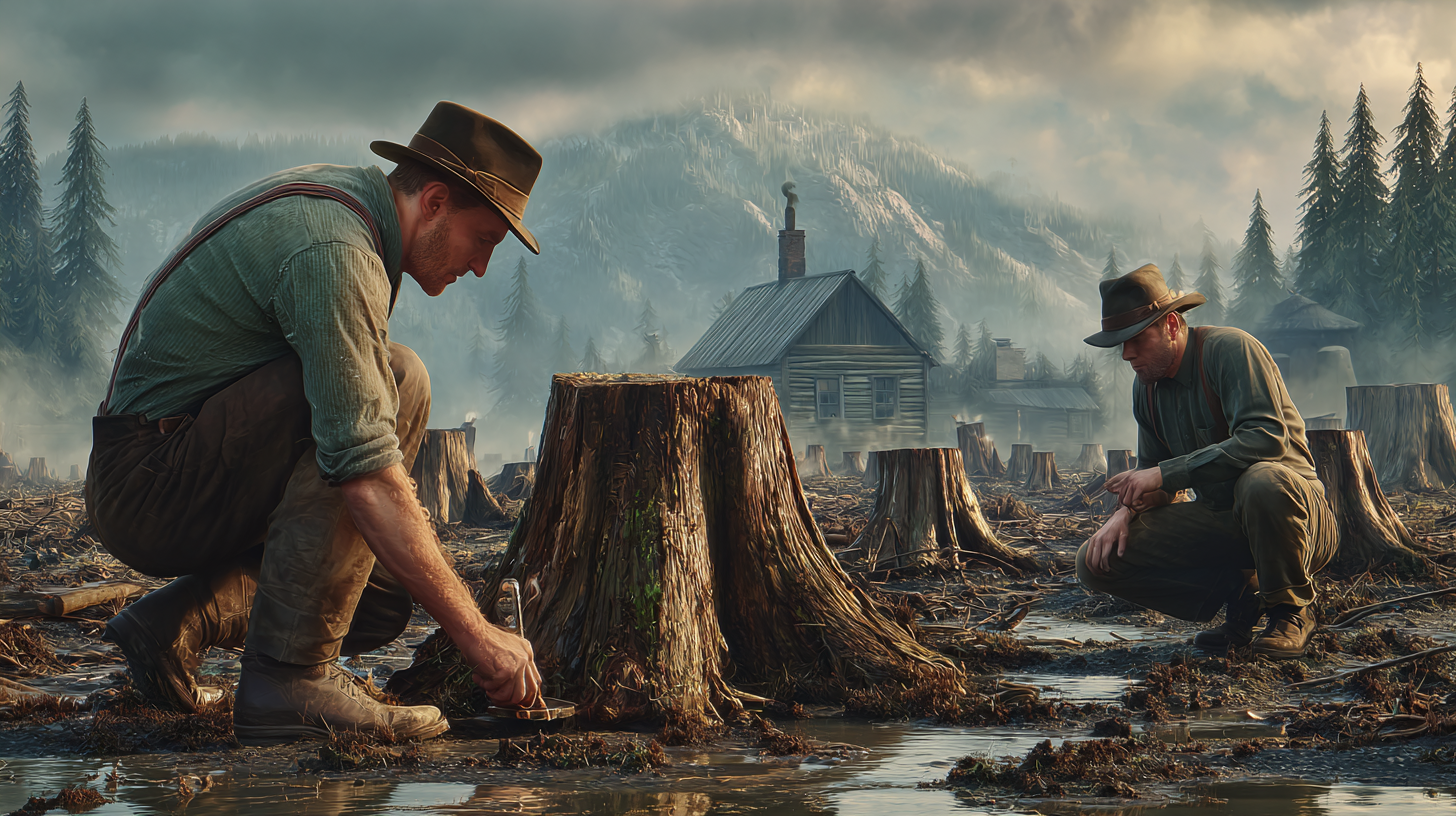



Comments
Post a Comment