Christmas Through the Eyes of My Ancestors Christmas has always been a time of reflection for me—not just about the present, but about the past. As a historical fiction author who writes about real people from my own family tree and the communities I call home, I can't help but wonder: what did Christmas look like for them? This year, as I've been writing and researching, I've been transported to three very different Christmases—each one a world away from our modern celebrations, yet each one filled with the same human longing for warmth, connection, and hope. Christmas with My Romani Ancestors For my English Romanichal ancestors—families like the Joles, Masons, and Rineharts who traveled through Michigan down to Oklahoma in the mid-1800s through early 1900s—Christmas was celebrated in a distinctly Romani way. Winter was when traveling families slowed their circuits, clustering wagons together on the outskirts of towns or hiring winter quarters on farm edges. Christmas gatherings centered on a respected elder, with related households drawing in for a few days if travel and money allowed. The focus wasn't on trees or public display—it was on kin. Extended family was everything. The celebration itself was simple but rich. Families attended Methodist or Baptist services when welcome, or held their own worship around the wagons when prejudice ran high. The single large meal featured whatever meat the family's purse allowed, served alongside potatoes, beans, and pies. Gifts were small tokens—an orange, a piece of candy, a new kerchief, a pocketknife. Can you imagine giving a child an orange today? They'd look at you like you'd lost your mind. But for a traveling family scraping by, that orange was gold. The real gift came after the meal: music, stories, laughter late into the night, fiddle and mouth organ, and tales about the old country. For my Romani ancestors, Christmas wasn't about abundance. It was about being together. A Woolsey Christmas in the 19th Century If you've read my Woolsey saga, you know it kicks off with A Mother's Last Gift—a Christmas story, though admittedly a heartbreaking one. It captures Christmas in the mid-19th century Midwest: family-centered, with simple handmade gifts like the quilt she made, each button telling a story. (Yes, I cried more than once while writing it.) My Woolsey ancestors knew Christmases that weren't filled with abundance or ease, but they were full of family and love. They would have attended the local church—likely a community-focused gathering rather than anything denominational, since they were settling new territories in the West. Simple, heartfelt, and deeply meaningful. Christmas During Prohibition and the Great Depression My Pack Saddle Ranch series is set in rural Idaho during Prohibition and the Depression. While writing it, I kept thinking about something my husband's grandmother told me when I interviewed her before dementia took her memories. I asked how life changed when the Great Depression started. She said, "Honey, we didn't know what the Great Depression was or when it started. We were already so poor that it was just normal life for us." Rural families like hers lived off the land—raising animals, growing their own food. They didn't feel the impact the way city folk did, at least not at first. Eventually, when they couldn't sell goods to pay taxes or buy seed and cloth, life got harder. But they were survivors. And in those years, an orange was still gold. Children today have no idea how blessed they are, how easy life is, or how much they take for granted. Someday I'll write Grandma's full story—it's too special to rush. My Christmas, Here and Now As I sit here typing, I look over at our Christmas tree piled high with gifts overflowing onto the floor. Life is much better for many of us than it used to be. But here's what I hope we don't forget: family and love should be the focus, not the electronics and the piles of presents. That's why I write my ancestors' stories—not just to remember them, but to honor them. To make sure their Christmases, hard-won and heartfelt, aren't forgotten. To show that you can be rich in love and poor in wealth, and that's what truly matters. Money isn't everything. The choices we make, the people we love, the memories we create—that's the legacy worth leaving. So this Christmas, maybe we can all take a page from our ancestors' book: slow down, gather close, and remember what really matters. From My Family to Yours Merry Christmas, dear readers. Thank you for walking this journey with me, for letting me share these stories, and for keeping the past alive in your hearts. You've made this year amazing, and I consider your support my greatest Christmas gift. I hope the stories bring you joy. With gratitude and holiday cheer,
Amy Crooks | 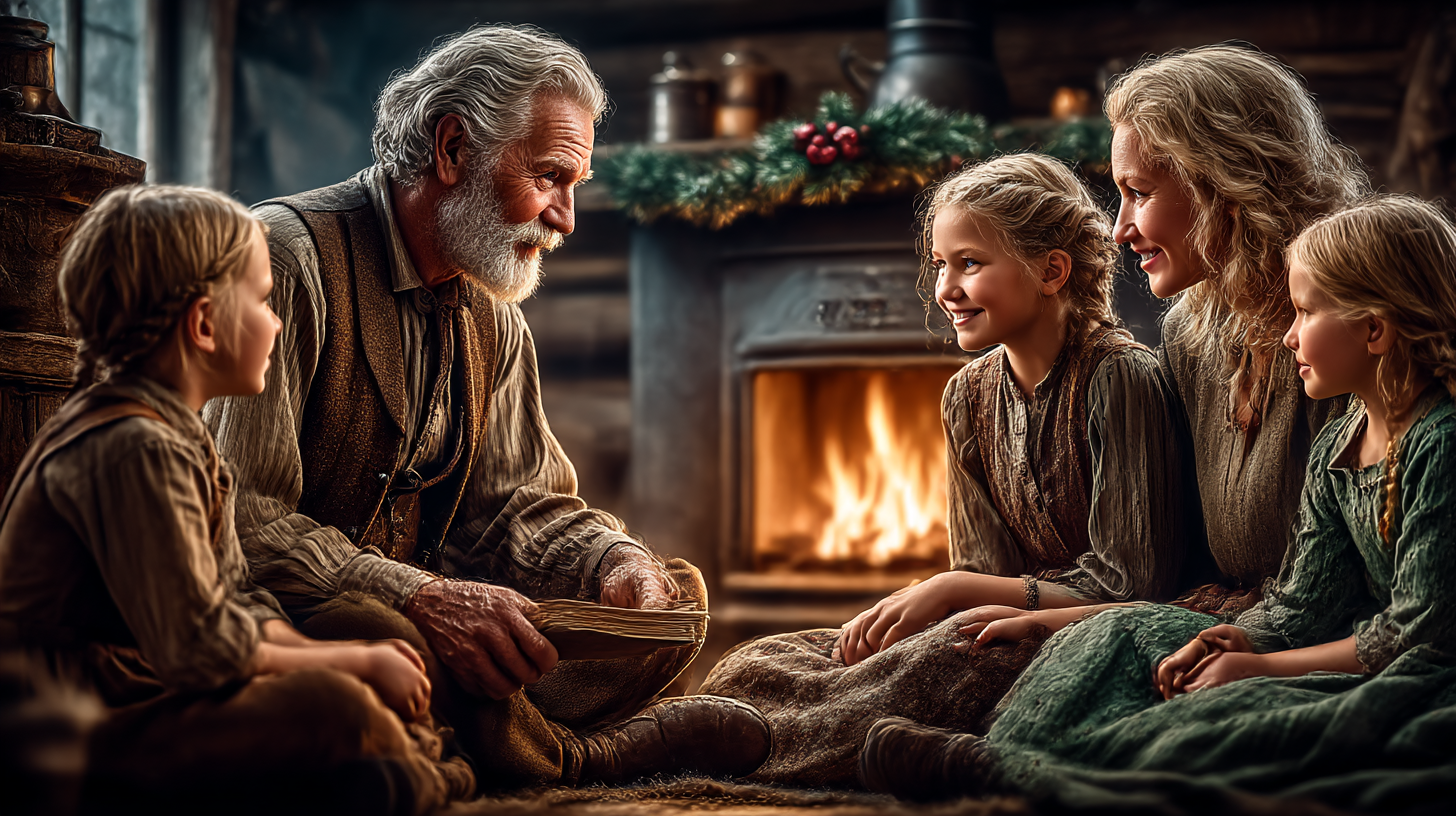


Comments
Post a Comment