Hello friends, I need to talk about something that's been weighing on me lately. My search history. You know that moment when you're deep in research mode, frantically Googling things for your book, and suddenly you stop and think, "If anyone saw my browser history right now, I'd have some explaining to do"? Yeah. That's been my entire week. Exhibit A: Medical Emergencies of the 1780s "How long does it take to die from a musket wound" "Can you survive a musket ball to the shoulder" "Revolutionary War field medicine" "Amputation without anesthesia survival rate" "What does gangrene smell like" Look, I need to know these things! Edward Beeson got shot at multiple times. People died around him. I can't just write "and then he was injured" without understanding what that actually MEANT in 1781. There were no ambulances. No antibiotics. No "let's just pop down to urgent care." Exhibit B: The Miracle of Life (18th Century Edition) "18th century childbirth mortality rate" "How did midwives stop bleeding in 1780" "What did people do when labor went wrong" "Childbed fever symptoms" "How many women died in childbirth colonial America" Edward had NINE children between his two wives. NINE. Elizabeth Ann had three babies, and Salena had four before she died at 29. I need to understand what Elizabeth and Salena went through every time they realized they were pregnant again. The fear. The risk. The knowledge that this might be the one that kills you. But typing those searches? At 2 AM? While the house is dark and quiet? Yeah, I felt like I should maybe leave a note on my desk: "I'M WRITING A BOOK. THIS IS RESEARCH. I AM NOT PLANNING ANYTHING." Exhibit C: Explosive Questions "Can you make gunpowder from..." Okay, I'm not even going to finish that one here. But let's just say I learned some very interesting things about saltpeter, charcoal, and sulfur. And also that the British tried to control access to these materials, which is why the Patriots had to get creative. But Google doesn't KNOW I'm writing historical fiction. Google just knows I'm asking about explosive materials at weird hours. Exhibit D: Weapons and Warfare "How accurate were muskets in 1780" "Effective killing range Revolutionary War musket" "How long to reload a musket in battle" "What happens when you get hit with a bayonet" "Tory guerrilla warfare tactics North Carolina" I'm trying to write realistic battle scenes! I need to know what Edward actually experienced at Cane Creek, at Charleston, at Needham's house. I need to understand the chaos, the smoke, the confusion, the close-quarters violence of it all. But sure, let's add "researching 18th century killing efficiency" to my list of "Things That Sound Bad Out of Context." Exhibit E: The Dark Stuff "How did people torture prisoners in Revolutionary War" "What did Tories do to Patriots they caught" "Revolutionary War atrocities North Carolina" "How long can someone survive being burned alive" This one haunts me. Colonel Balfour. John Brown. The Tories didn't just kill them—they burned their houses with them inside or murdered them in front of their families. This happened to Edward's neighbors, his commanders, people he knew. I can't write about this era and pretend it was all noble battles and stirring speeches. It was brutal. It was personal. It was neighbors turning on neighbors. But yeah, Googling "Revolutionary War torture methods" sure makes me feel like I should be on a watchlist. The Point If you're a historical fiction writer, true crime author, mystery novelist, or really anyone who writes anything darker than a Hallmark movie, you KNOW this feeling. You know the moment when you realize your Alexa has heard you ask three detailed questions about poison, or your Google search history looks like a serial killer's vision board, or you've been scrolling through medieval torture devices "for research" and suddenly you wonder if you should clear your cache. We're not planning crimes, FBI. We're just trying to write good books. We're trying to honor the people who lived through these things by portraying them accurately. We're trying to make sure that when someone reads about Edward Beeson getting ambushed on Brush Creek, or Elizabeth Ann going into labor for the third time, or the Tories burning Colonel Balfour's house, they FEEL it. They understand what it cost. But man, the search history is ROUGH. Your Turn Hit reply and tell me the most concerning thing you've ever Googled for research purposes. Make me feel less alone here. Bonus points if you've had to explain it to a concerned family member who saw your search history. I'll start: Last week I Googled "can you eat acorns" followed immediately by "starvation timeline" and then "how to tan leather with brains." Your turn. Don't leave me hanging. Writing Update The book is coming along! Slowly. Between managing concerning search histories and convincing my family I'm not building a bomb in the basement, I'm actually getting words on the page. Edward's story is worth every weird Google search. That's all from me this week. Now go Google something suspicious and report back. Until next time, Amy P.S. - Seriously though, if anyone from the FBI IS reading this: Hi! I'm a novelist! I write historical fiction! Here's my Amazon author page! I promise I'm harmless! Please don't raid my house; the grandbaby is sleeping! | 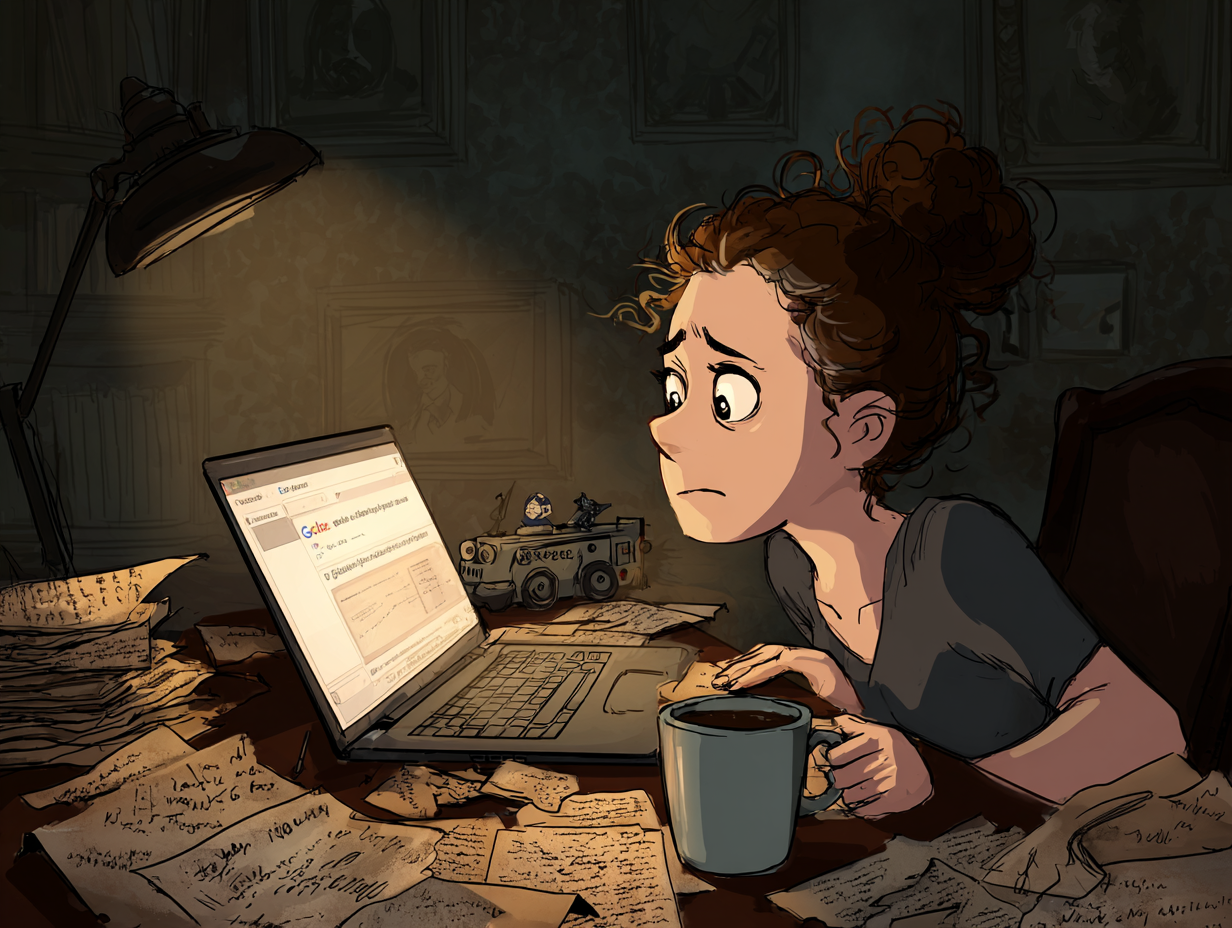


Comments
Post a Comment