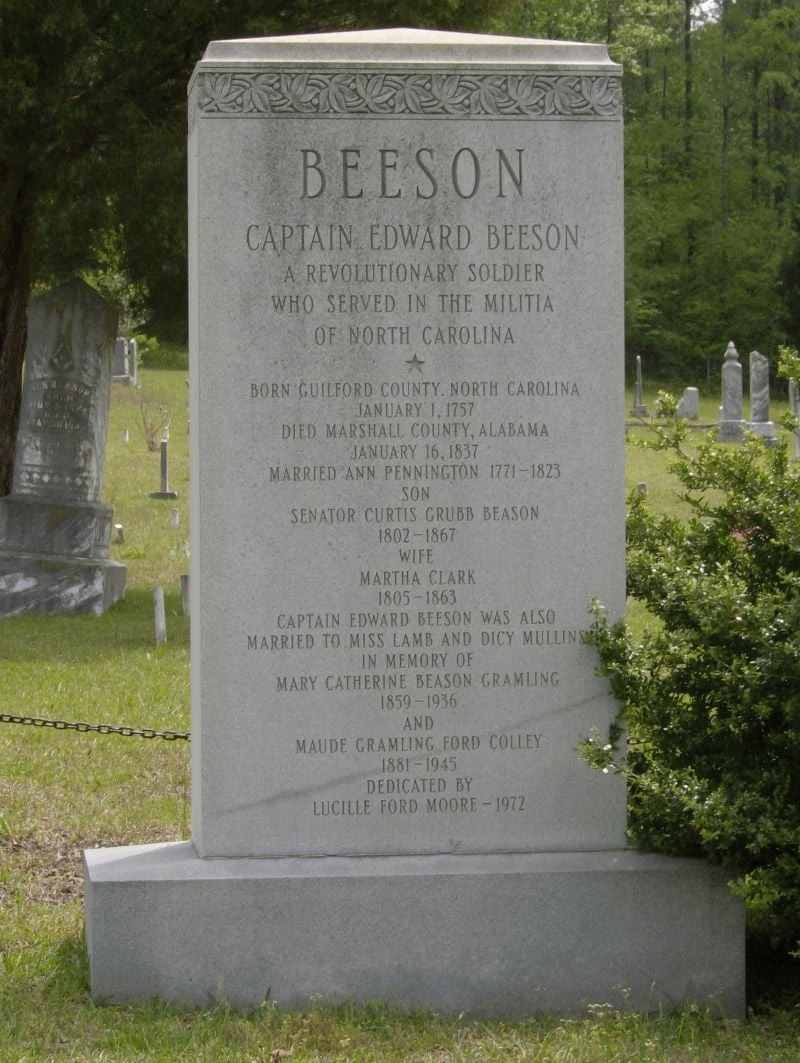
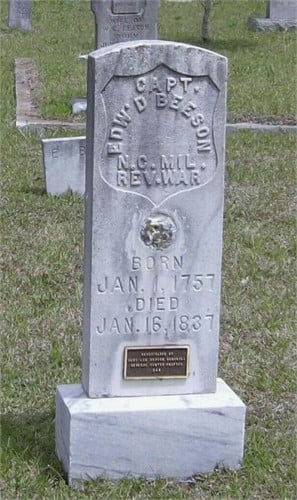
Hello friends, I've been eyeballs deep in the research on my Patriot ancestor, so I'd like to take a moment and share the backstory behind the book I'm currently writing. This ancestor is the very one I entered into the Daughters of the American Revolution with. I'll be spending a significant amount of time now feverishly writing to get the book done before our Idaho DAR annual meeting in April—I want to feature it there. I've already donated some of my other books to raise funds for the DAR, but I want to feature this one specifically. Anyway, I got a little sidetracked there. Let me introduce you to the man behind the story. Meet Captain Edward Beeson Edward Beeson was born on January 1, 1757, in Guilford County, North Carolina, to Benjamin and Elizabeth Hunter Beeson. He was 21 years old when the Revolution began, living in what would become Randolph County—a young man in a region that would become one of the bloodiest battlegrounds between Patriots and Tories in the entire war. In the spring of 1778, Edward volunteered as an ensign under Captain David Brower. Their mission: hunt down the Tories terrorizing the countryside. The day after they left their rendezvous point at Johnsonville, tragedy struck. Major Rains and his Tory forces ambushed them from a steep hill along Brush Creek. Captain Brower and three other men were killed in the volley. Lieutenant James Woods became captain. Edward became lieutenant. They pursued those Tories forty miles to Fork Creek, where they besieged them at John Needham's house in the fall of 1781. Colonel Thomas Dougan himself joined them that morning. Edward was ordered to take half his company around back through an orchard while the rest attacked from the front—a feigned retreat designed to draw the Tories out. It worked. Edward's men were the first to take possession of the house. Twenty-one Tories died that day: seven at the house, fourteen more where they'd fled to hide their horses along the bank of Deep River. Colonel Dougan had positioned himself there with a detachment, waiting to surprise them if they ran. From there, they marched to Cape Fear Town, then on to Brown Marsh near Wilmington. They defeated the Tories on open ground at Cane Creek on September 13, 1781—until the British reinforced them from Fort Johnson. Then the tide turned, and the Americans were defeated in their turn. They retreated back to Guilford. Three months of service. Then discharge. Edward came home. The very next day, he was elected captain, beating out Woods for the position. John Jones became his lieutenant, William Brown his sergeant. But there was no rest. The Tories had regrouped and taken Hillsborough, capturing Governor Thomas Burke on September 12, 1781. Edward and his company marched to join forces with men from Orange, Wake, and Chatham counties. They went to Cane Creek—the Battle of Lindley's Mill—and attacked. Their colonel, John Lutteral, was killed. Many of their men fell. But the Tory general Hector McNeil died in that skirmish too, and their Colonel David Fanning took a bullet that broke his arm. The Americans were defeated, but the Tories paid dearly for their victory. Another three to four months of service. Then came the spring of 1782—March 10th, to be exact. The Tories struck close to home. They burned Colonel Dougan's house. They killed Colonel Balfour and burned his house. They killed John Brown and torched his home. Milligan's and Collier's houses went up in flames. Edward and his company, now under Colonel Bletcher, pursued them. He remained captain until the close of the war. But perhaps his most harrowing service came earlier, before all of this. Edward was at Charleston with his company under General Lillington when the British took the city on May 12, 1780. The regulars entrenched down on the wharf were captured. Edward's company escaped. Four months of service that time. He received a written discharge from General Lillington—a document he would later lose or destroy. "This deponent served several other times for a short space," his pension application would later read, "and the particulars of which he cannot either recollect or describe as this deponent's memory is so impaired by age that almost common occurrences are forgotten by him." Edward lost his first commission as captain during the war. He had to petition the governor to get it replaced so he could receive his pension.
| 








Comments
Post a Comment